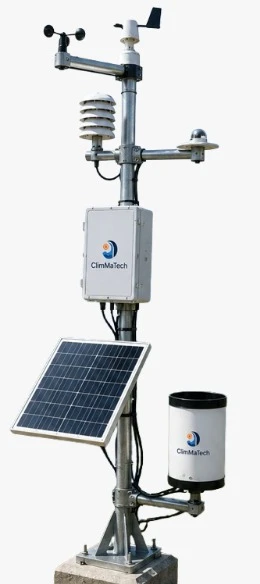
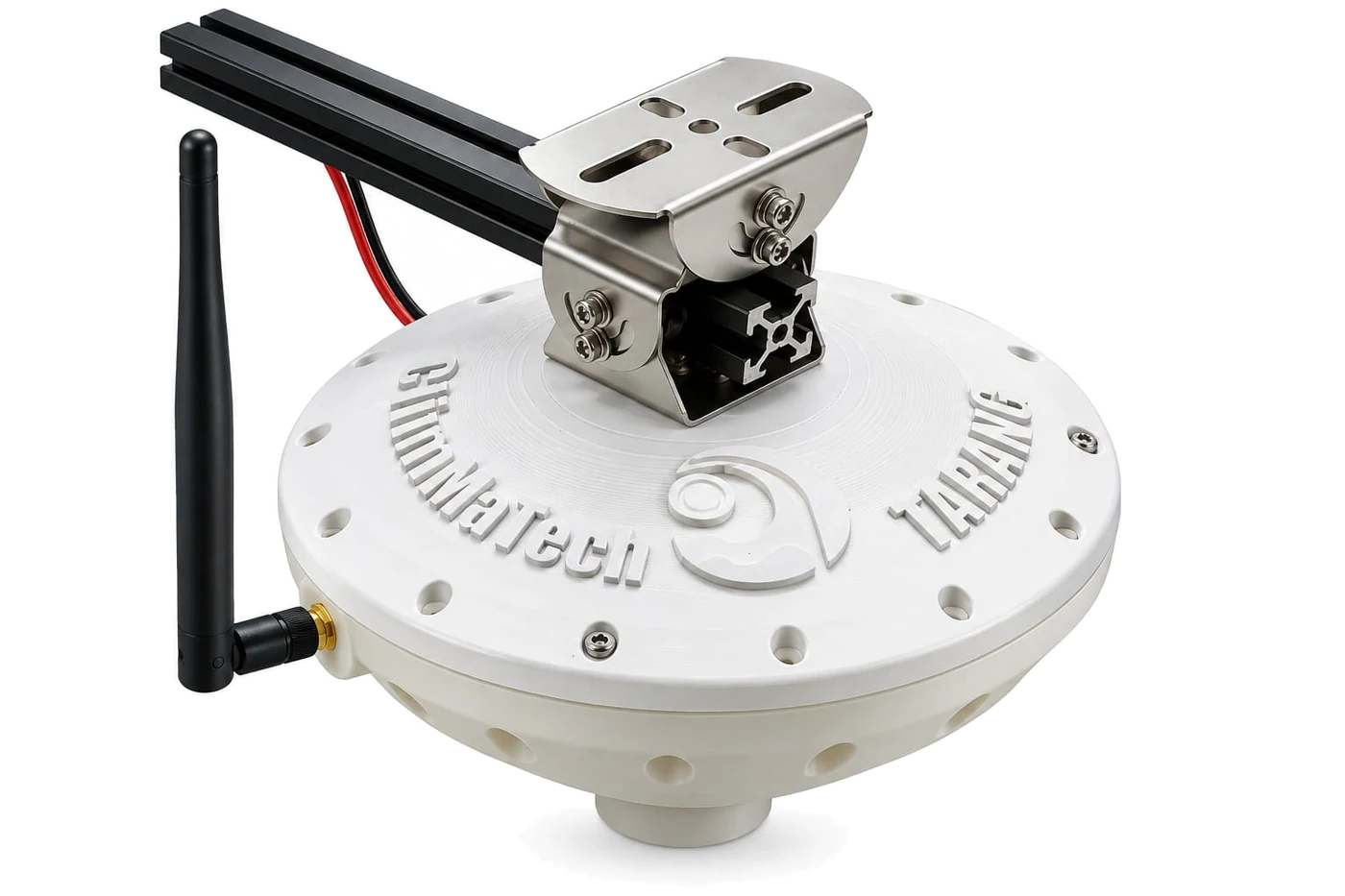
Key Features of TARANG
Millimetre Accuracy
± 1 mm accuracy and 0.5 mm resolution across a 0-50 m range.
Non-Contact Sensing
Radar measurement is unaffected by water quality, debris or temperature changes.
Configurable Sampling
1 sample/s by default, configurable up to 10 samples/s.
Engineering Specifications
Technical details for TARANG.
Connectivity
GSM (2G / 3G / 4G)
LoRa
MQTT
RS-485
RS-232
SDI-12
4-20 mA
NB-IoT (optional)
Wi-Fi (optional)
Why Choose the TARANG?
Discover the powerful features that make TARANG a trusted solution for critical environmental monitoring applications.
Low Power
Under 1.5 W when active and 0.2 W on standby, suited to solar-powered sites.
Multiple Outputs
4-20 mA, RS-485, RS-232, SDI-12, LoRa and MQTT, plus GSM (2G / 3G / 4G), with optional NB-IoT and Wi-Fi.
Weatherproof and Rugged
A weatherproof enclosure built for outdoor deployment.
Part of the ClimMaTech Platform
Once TARANG is connected, its data flows into the ClimMaTech cloud: dashboard, alerts, reports and APIs.
Platform Features
Real-Time Dashboard
Historical Trends
Alert Management
API Integration
Multi-Site Monitoring
Report Generation
System Architecture
1
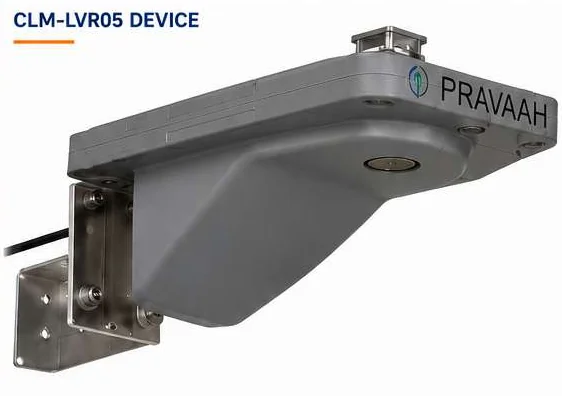
TARANG (CLM-LR05)
2
Secure Communication Link
3
ClimMaTech Cloud
4
Dashboard, Alerts & APIs
ISO 9001:2015 CERTIFIED ORGANISATION
Designed, Engineered & Made in IndiaRelated reading
Technology · 9 min read
How FMCW radar measures water level: chirps, beat frequency, phase and the installed error budget
How a radar that never touches the river reaches millimetre precision, what limits it in the field, and why the accuracy on the datasheet is not the accuracy of the installed station.
Technology · 13 min read
Radar, ultrasonic, float and pressure water level sensors compared: physics, error budgets and field behaviour
How each of the four common stage sensors actually measures, where its error comes from, and what the standards and field studies say about each. With worked numbers.
Technology · 7 min read
Rating curves: from stage to discharge, and how far to trust them
How a stage-discharge relation is built and fitted, why extrapolating it to a flood is where the largest errors hide, what makes it shift or loop, and what to do about all of it.